

FOR ANYONE WHO HAS EVER SAID, "WHY DID I REACT LIKE THAT?"
Under Pressure, Your Brain Doesn't Lose Intelligence. It Loses Access to It.
You know what to say. You know what matters. Then the pressure hits, and something else takes over.
You snap at someone you care about. You freeze in the meeting. You replay the conversation at 2 a.m. And a familiar voice inside says, "You always do this."
That isn't a flaw in your character. It's your brain protecting you, falling back on old predictions and cutting off the clear, calm thinking you already have.
Two conversations shape every outcome: the one you have with others, and the one you have with yourself. When pressure takes over your inner dialogue, it quietly drives your choices, your tone and your results.
Assess My Resilience ReserveA free 3-minute check of how pressure may be affecting your clarity, communication and recovery.
41 years · Approximately 15,000 people · Canadian Forces fire service leaders · Author of InPowered Performance
Who this is for
- Leaders and managers who stay steady for everyone else but feel the strain behind the scenes
- First responders and high-stakes professionals who carry what they've seen into the next shift and back home
- Athletes and coaches who know the difference between being in the zone and losing it, and want that same clarity in practice, in the locker room and after the season
- Professionals and business owners stuck in overthinking, self-doubt or decisions they keep putting off
- Teams where stress is turning into friction, silence or burnout
- Anyone who wants to respond on purpose instead of reacting on autopilot
What I help you do
- Notice the patterns pressure switches on in your body, your words and your inner story
- Regulate first, so the clear, rational part of your brain comes back online
- Release the emotional and physical charge you've been carrying
- Update the brain predictions that keep pulling you back into the same reactions
- Communicate clearly, with others and with yourself
State before strategy.
WAYS TO WORK TOGETHER
Choose the Support That Fits Your Situation
Start with a book, explore coaching, bring Ed to your team, or turn to Eddy Chat in the moment.
Practical support for clearer thinking, better conversations, with yourself and others, and more deliberate responses under pressure.

Leaders and Teams
Build a shared language for pressure, self-talk and communication. Practise responding with clarity when expectations rise or conversations get difficult.
Explore leaders and teams
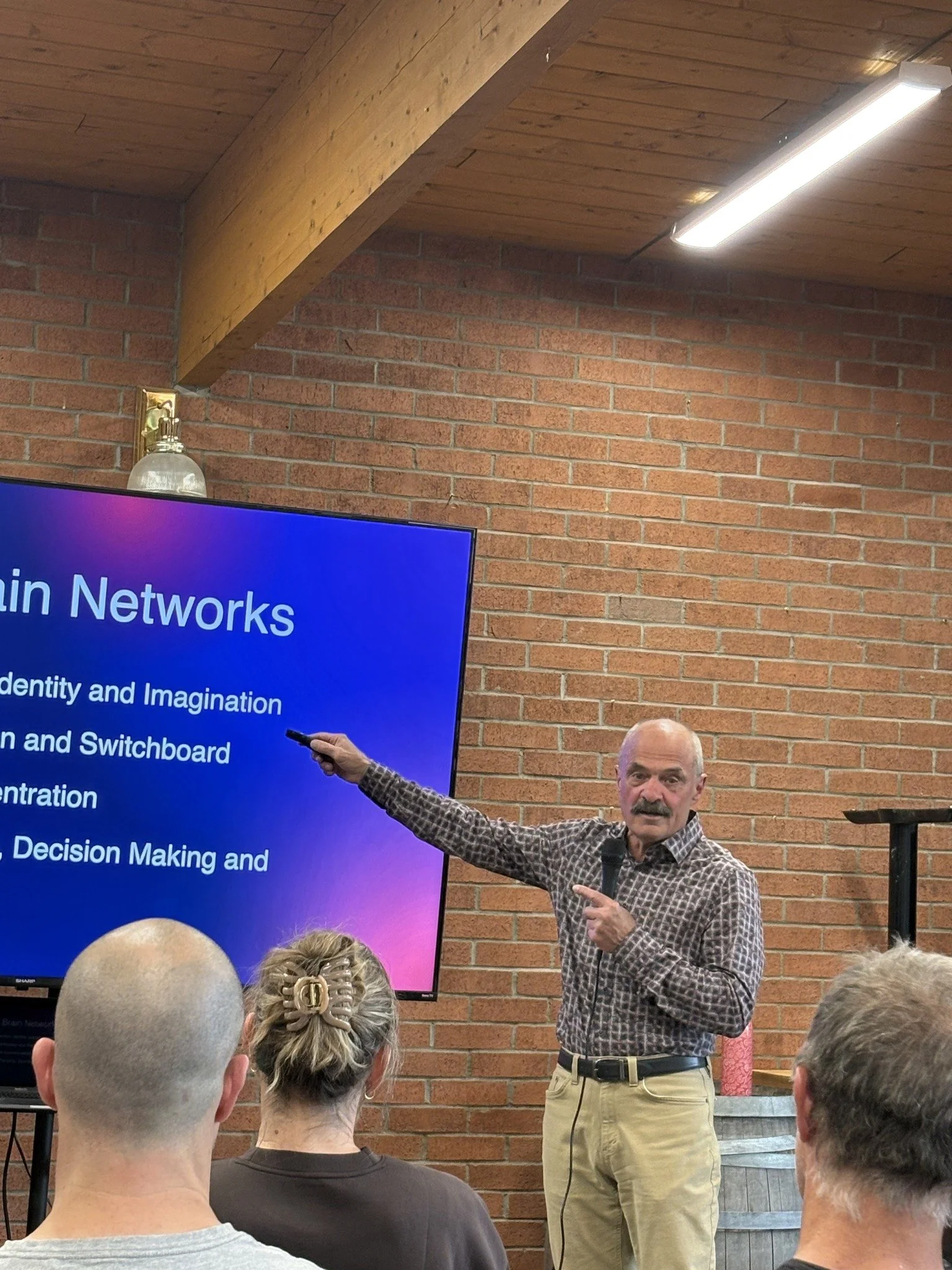
Speaking and Workshops
Bring State Before Strategy to your group through interactive presentations on brain predictions, regulation and performance under pressure.
Explore speaking and workshops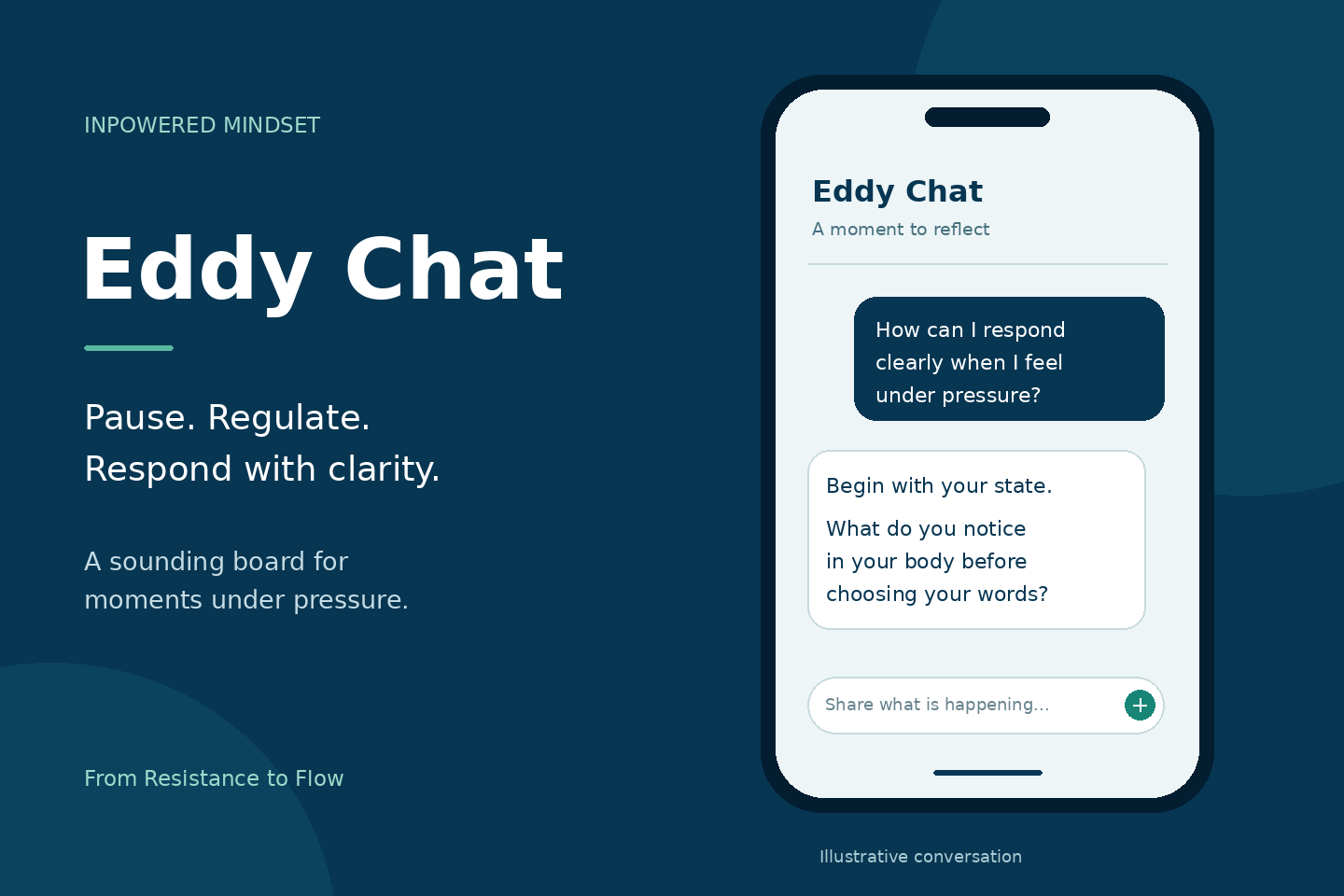
Eddy Chat
Bring a real situation in your own words. Get educational coaching to help you pause, notice your inner dialogue and choose a grounded next step.
Try Eddy Chat
Coaching with Ed
Work with Ed on the situations that matter to you, from difficult conversations and self-doubt to leadership demands or performance pressure.
Book a Conversation with Ed →
InPowered Performance
Discover the book behind the work, and how attention, stress, brain plasticity and repetition relate to changing familiar patterns.
Explore the book
Articles and Resources
Explore practical ideas for self-talk, communication, recovery and responding to everyday pressure.
Browse resourcesPressure Changes How You Think Communicate and Lead
When demands are high, even capable and experienced people can lose access to the clarity, patience and perspective they normally rely on.
InPowered Mindset helps leaders, professionals and teams understand what pressure is doing to the brain and nervous system, regulate before reacting, communicate more effectively and build the resilience reserve required for sustainable performance.
Stay clear under pressure. Recover more completely afterward. Stop carrying unfinished demand into the next decision, the next conversation or home.
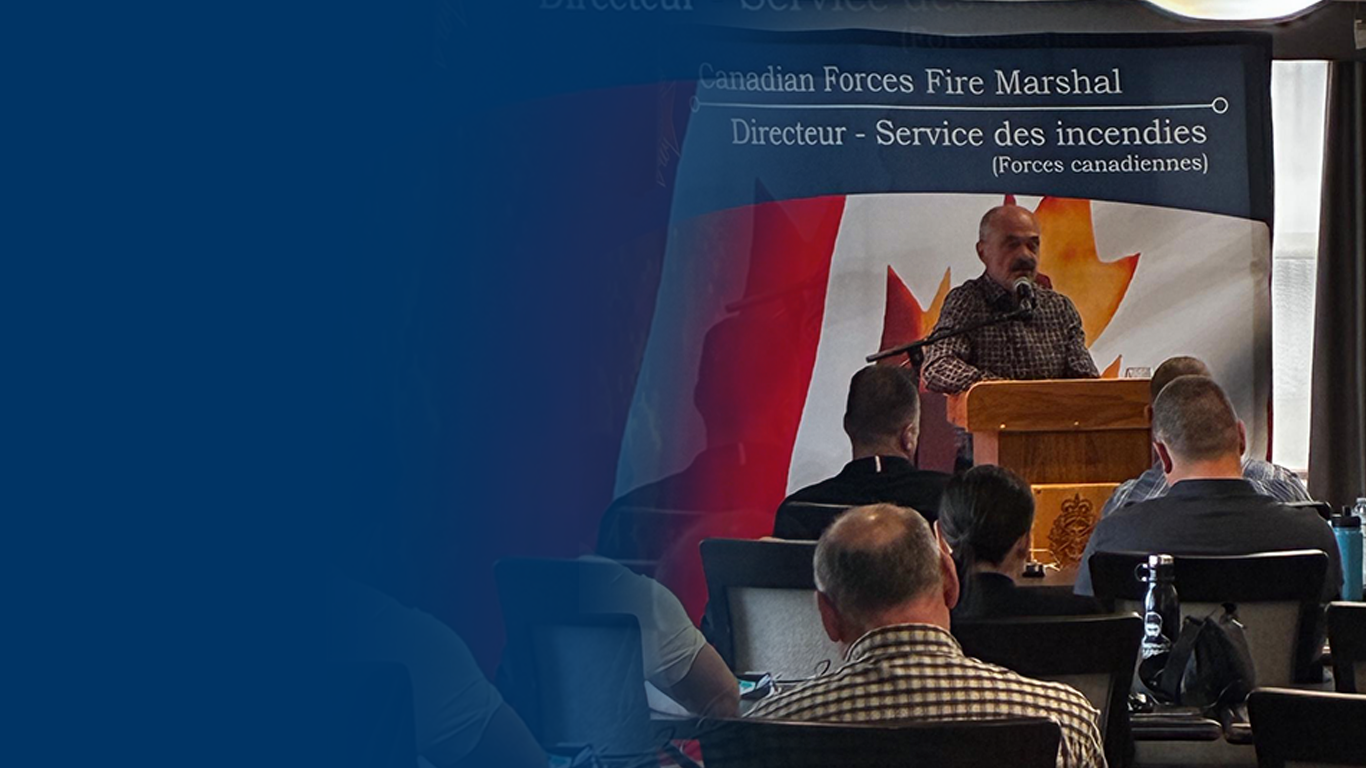
WHEN PRESSURE FOLLOWS YOU HOME
You May Be Handling the Pressure. But What Is the Pressure Doing to You?
You are still showing up. You are still making decisions, and people still depend on you. From the outside, you appear to be handling it.
But pressure often shows up in quieter ways:
- You replay conversations long after they have ended.
- You fall back into habits and reactions you outgrew long ago.
- You understand the pattern and still find yourself repeating it.
- You carry the residue of work into your home.
- You know exactly what to do, but can't access it when it matters.
None of this means you are weak or failing. Sustained pressure can quietly reduce access to capacities you already have.
The situation may be over. Your internal response may still be running.
A Short Introduction from Ed
Hear Ed explain the work behind InPowered Mindset and the shift from familiar patterns toward greater freedom and choice.
THE PRINCIPLE BENEATH PERFORMANCE AND COMMUNICATION
Before You Choose the Strategy, Consider the State
Most leadership, communication and training begins with what to say, what to think or what to do. InPowered Mindset begins one step earlier: the state you are in while you think, listen and respond.
Under pressure, the brain narrows its attention. Protective reactions become easy to reach; reflection, flexibility and careful communication become harder.
The same good strategy can produce two very different outcomes, depending on the state it is delivered from.
This is State Before Strategy.
Regulation is not the absence of pressure. It is staying steady enough to choose the response the situation requires.
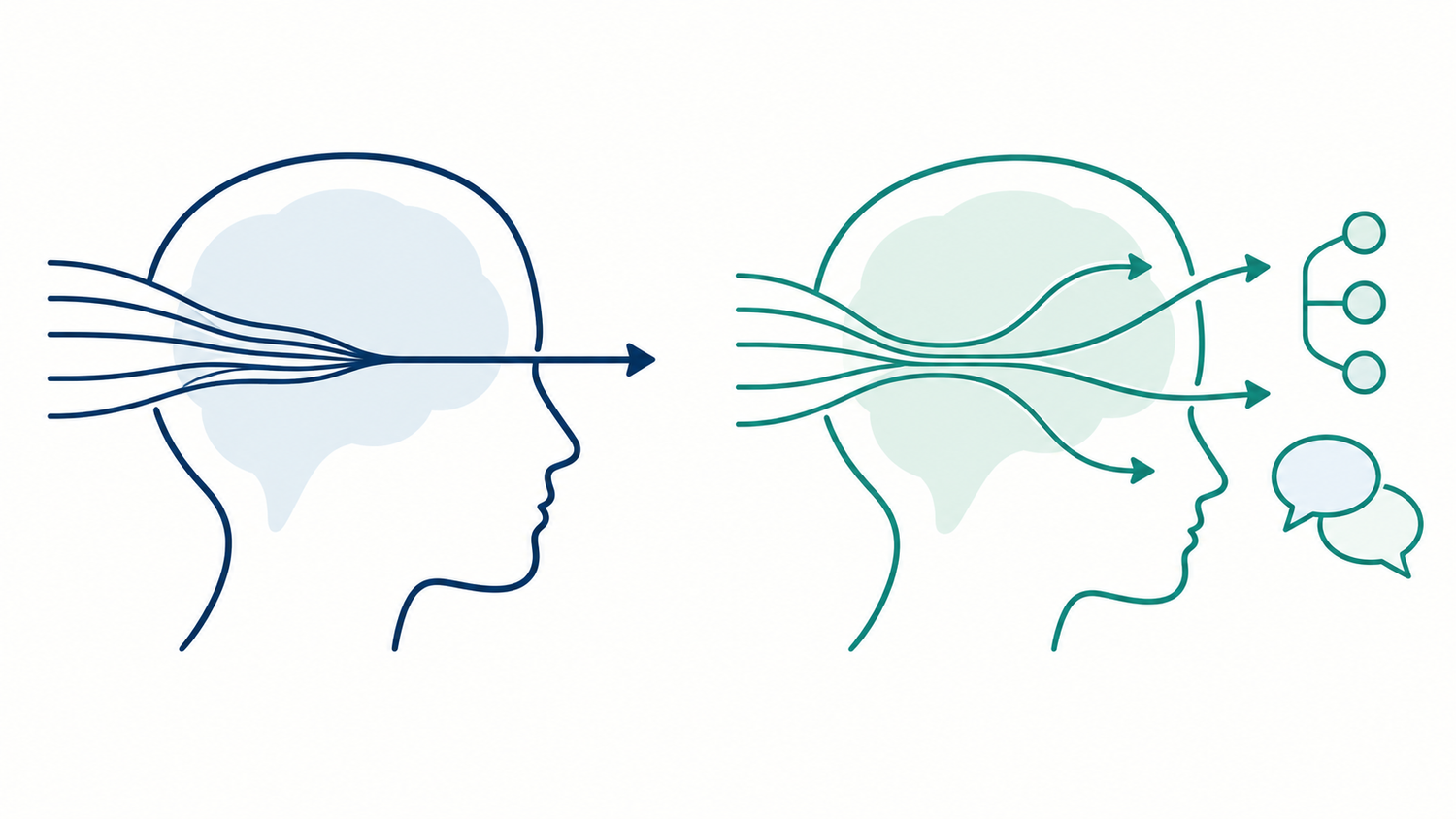
Under pressure
Nervous System Dysregulated
Narrowed attention. Automatic reaction.
With regulation
Better Nervous System and Brain Function
Wider perspective. Choice. Communication.
Every Conversation Begins Before the First Word Is Spoken
Every conversation carries two messages: the information in your words, and the nervous-system state they are delivered from. Tone, pace, tension and timing all shape how your message is received.

Before the conversation begins, both brains are already predicting what will happen. One person may expect criticism. The other may expect resistance. Those predictions influence what each person notices, how the message is interpreted and how quickly each reacts.
This is why a reasonable message can produce an unreasonable outcome, and why changing the words alone may not change the conversation.
Before an important conversation, ask:
- What does this person need from me in this moment?
- What am I already predicting about how this will go?
- What state do I need to bring into this conversation?
When we respond to our prediction of the person, we may never fully encounter the person who is actually in front of us.
CAPACITY YOU CAN BUILD
Resilience Is a Reserve You Build Before You Need It
Resilience is often described as a personality trait, as though some people simply have it and others do not. A more useful way to see it: a reserve of mental, emotional and physiological capacity.
Every demand makes a withdrawal. Recovery, sleep, movement, connection, regulation and meaning make deposits.
When the reserve is strong, you stay functional under pressure, recover when the pressure passes and leave work behind when you go home. When withdrawals repeatedly exceed deposits, even highly capable people become more reactive, rigid, fatigued or disconnected.
The question is not only, Can I handle this? It is also, What is this costing my system, and am I replenishing the reserve?
Assess My Resilience ReserveDiscover which capacities are supporting you and where sustained pressure may be creating greater cost.
YOUR RESILIENCE RESERVE
Build the reserve through repeated deposits. Give recovery the same attention you give responsibility.
TRAINABLE CAPACITIES
Five Capacities for Responding Better Under Pressure
You cannot remove every demand. You can practise how you meet it, including the conversation you have with yourself.
These five capacities help you move from automatic reaction toward a more deliberate response. Knowing them is the starting point. Practising them in everyday situations is what builds familiarity.
Recognize
Notice the early signs of pressure in your body, attention, inner dialogue and behaviour.
Regulate
Settle your state enough to pause, regain perspective and consider your options.
Reconsider
Separate what is happening from what your brain is predicting. Does the familiar story fit the present facts?
Respond
Choose words and actions that serve the situation, not just the reaction pressure brings up.
Recover
Make room to settle and replenish after demand, rather than moving straight into the next challenge.
THE METHOD BENEATH THE CHANGE
From Automatic Reaction to Conscious Choice
Recognizing a pattern is one thing. Responding differently when it matters takes practice.
The Neuro-Integrative Release Method (NIRM) offers five steps for working with the emotional charge, inner story and familiar reactions that can keep a pattern going.
Its guiding principle is Release Before Replace: begin by easing the charge, not forcing a new thought over it, then practise the response you want to strengthen.
THE FIVE-STEP NIRM PROCESS
Notice the pattern: what you are feeling physically and emotionally, what you are telling yourself and preparing to do.
Use a brief, voluntary breathing or somatic practice to ease tension. Release or let go of the negative emotion.
Choose a more useful interpretation and one grounded next action, based on your values.
Put that choice into practice. Notice what happens and adjust without demanding perfection.
Repeat the new response in everyday moments so it becomes more familiar and easier to return to.
A shorthand for the practice, not a mathematical promise: notice the pattern, ease the resistance, choose your response and keep practising.
MEET ED CHICOINE
Four Decades of Listening. One Practical Question.
Why do people know what to do, and still struggle to do it under pressure?
During 41 years in clinical practice, Ed Chicoine worked with approximately 15,000 people. That question surfaced again and again.
It led him to explore how nervous system state, brain predictions and inner dialogue influence our choices and behaviour.
Today, Ed brings those ideas into practical coaching, presentations and workshops for people navigating responsibility, change and performance pressure.
He is the founder of InPowered Mindset, creator of the Neuro-Integrative Release Method and author of InPowered Performance.
Book a Conversation with EdREAL EXPERIENCES
What Changed for Them
Clearer thinking. Better conversations. Practical tools they return to when pressure rises.
“My mindset is completely different in my personal life, and the impact on my professional life has been just as significant.”
Cesar Chanussot, Business ManagerExcerpt from a longer client email.
Read the full testimonial
Just a spontaneous email to share a little update on my experience with Ed Chicoine. First of all: WOOOWWWWW!
It's incredible to see the changes and results from everything we've worked through during our sessions. I'm extremely satisfied, and the positive changes have been numerous. My mindset is completely different in my personal life, and the impact on my professional life has been just as significant.
This experience is really helping me rebuild myself, gently and in a positive direction, following the difficult event I went through last year.
It's also opening up so many new possibilities in terms of mindset, the overall atmosphere, sharing ideas, and solving problems at work. I feel so much better and more at peace with whatever comes my way.
We're now moving into the "communication" phase of our work together. I find this really interesting, and I'm excited to see just how much it will influence the overall energy and results in both my professional and personal life.
Cesar Chanussot, Business Manager
Chris Reid · 1:33
Practical Change Through NIRM
Chris shares his experience with the practical exercises and working through familiar obstacles.
Sophie · 1:20
Stronger Trust and Communication
Sophie reflects on structured individual and team sessions at FAB Structures.
What People Experience
“The individual and group sessions helped us release the tension and mental clutter that had been slowing us down. We came out of it not just communicating better, but operating with renewed clarity, energy, and alignment.”
Sophie Abboud
“With each session, I not only felt calmer and more present, I also learned simple tools to reset my mind and body when challenges arise whether it’s pausing before a tough conversation, noticing and releasing tension, or re-framing a negative story.”
Jack Hull
“I have had the privilege of experiencing Ed's presentations on healthy living, and I can confidently say that they are among the best I've seen.”
Christine Marleau
Excerpts from client and presentation testimonials. Individual experiences are not presented as guaranteed outcomes.
Begin by understanding how pressure may be affecting your clarity, communication and recovery.
Book a Conversation with EdYOUR PRACTICAL STARTING POINT
How Much Resilience Reserve Do You Have Right Now?
You may be keeping up with life while finding it harder to think clearly, communicate patiently or recover after demanding days.
The free Resilience Reserve Assessment offers a starting point for reflection across five capacities:
- State awareness
- Regulation and choice
- Predictions and communication
- Recovery and reserve
- Sustainable capacity under pressure
In approximately three minutes, explore where you feel supported, where pressure is showing up and what to strengthen first.
Explore the free assessment →Educational, not diagnostic. This assessment does not diagnose a medical or psychological condition.
Your results will be sent to you. If you choose to receive practical insights, you can unsubscribe at any time.
ILLUSTRATIVE PREVIEW
Your Resilience Reserve
Five capacities. One practical place to begin.
State awareness
Regulation and choice
Predictions and communication
Recovery and reserve
Sustainable capacity
BEST PLACE TO BEGIN
Make space for recovery.
Example profile only. Your personal results will reflect your responses.
Pressure May Be Part of Life.
Carrying It Everywhere Does Not Have to Be.
Start by noticing what pressure is doing to you, and what could help you respond differently.
State Before Strategy. Release Before Replace. From Resistance to Flow.
Assess My Resilience Reserve